Sunday, November 25, 2012
Charlotte's Suggestions
Moloka'i
Alan Brennert
fiction
389 pages
paperback
Young Rachel Kalama, growing up in idyllic Honolulu in the 1890s, is part of a big, loving Hawaiian family, and dreams of seeing the far-off lands that her father, a merchant seaman, often visits. But at the age of seven, Rachel and her dreams are shattered by the discovery that she has leprosy. Forcibly removed from her family, she is sent to Kalaupapa, the isolated leper colony on the island of Moloka'i.
In her exile she finds a family of friends to replace the family she's lost: a native healer, Haleola, who becomes her adopted "auntie" and makes Rachel aware of the rich culture and mythology of her people; Sister Mary Catherine Voorhies, one of the Franciscan sisters who care for young girls at Kalaupapa; and the beautiful, worldly Leilani, who harbors a surprising secret. At Kalaupapa she also meets the man she will one day marry.
True to historical accounts, Moloka'i is the story of an extraordinary human drama, the full scope and pathos of which has never been told before in fiction. But Rachel's life, though shadowed by disease, isolation, and tragedy, is also one of joy, courage, and dignity. This is a story about life, not death; hope, not despair. It is not about the failings of flesh, but the strength of the human spirit.
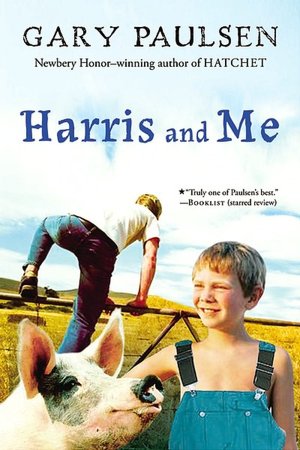
Harris and Me
Gary Paulsen
young adult fiction
157 pages
paperback
"A hearty helping of old-fashioned, rip-roaring entertainment," said PW about this post-WWII story of an 11-year-old boy sent to spend the summer on his relatives' farm.
Gary Paulsen never shuns writing about real life to spare your kiddies' artificial innocence. His books deal with the pains and joys of childhood - parental quarrels, alcoholism, abusive behavior, etc. - more forthrightly than any other children's writer I encountered with my own son as he was learning to read, and my son loved Paulsen's book enough to choose them for himself.
"Harris and Me" is a first-person narrative, told by a boy whose dysfunctional family has sent him to live with kinfolk on a backcountry farm in Minnesota. Harris is the bigger boy whose family has the farm. He becomes the narrator's surrogate older brother and role model for devil-may-care enjoyment of boyish wildness. The narrator senses that his own nature is different from Harris's but he treasures Harris's spirit. It's a quick read for an adult, a kind of hyper-condensed adventures of Tom Sawyer and Huck Finn. It's fun for the right kid to read silently or out loud, but children raised in a household devoted to propriety may find it incomprehensible, since propriety is not a virtue on Gary Paulsen's farm.
Caleb's Crossing
Geraldine Brooks
fiction
318 pages
paperback
Bethia Mayfield is a restless and curious young woman growing up in Martha's vineyard in the 1660s amid a small band of pioneering English Puritans. At age twelve, she meets Caleb, the young son of a chieftain, and the two forge a secret bond that draws each into the alien world of the other. Bethia's father is a Calvinist minister who seeks to convert the native Wampanoag, and Caleb becomes a prize in the contest between old ways and new, eventually becoming the first Native American graduate of Harvard College. Inspired by a true story and narrated by the irresistible Bethia, Caleb’s Crossing brilliantly captures the triumphs and turmoil of two brave, openhearted spirits who risk everything in a search for knowledge at a time of superstition and ignorance.
Saturday, November 24, 2012
Bonnie's Suggestions
The Paris Wife
Paula McLain
Historical Fiction
352 pages
Paperback
Chicago, 1920: Hadley Richardson is a quiet twenty-eight-year-old who has all but given up on love and happiness—until she meets Ernest Hemingway. Following a whirlwind courtship and wedding, the pair set sail for Paris, where they become the golden couple in a lively and volatile group—the fabled “Lost Generation”—that includes Gertrude Stein, Ezra Pound, and F. Scott Fitzgerald.
Though deeply in love, the Hemingways are ill prepared for the hard-drinking, fast-living, and free-loving life of Jazz Age Paris. As Ernest struggles to find the voice that will earn him a place in history and pours himself into the novel that will become The Sun Also Rises, Hadley strives to hold on to her sense of self as her roles as wife, friend, and muse become more challenging. Eventually they find themselves facing the ultimate crisis of their marriage—a deception that will lead to the unraveling of everything they’ve fought so hard for. A heartbreaking portrayal of love and torn loyalty, The Paris Wife is all the more poignant because we know that, in the end, Hemingway wrote that he would rather have died than fallen in love with anyone but Hadley.
Invisible Cities
Italo Calvino
Historical Fiction
176 pages
Paperback
Imaginary conversations between Marco Polo and his host, the Chinese ruler Kublai Khan, conjure up cities of magical times. “Of all tasks, describing the contents of a book is the most difficult and in the case of a marvelous invention like Invisible Cities, perfectly irrelevant” (Gore Vidal). Translated by William Weaver. A Helen and Kurt Wolff Book.
One of the world's best storytellers, Italo Calvino (Invisible Cities) pinpoints for future generations the universal values for literature. Here are his works, methods, intentions, and hopes.
352 pages
Hardcover
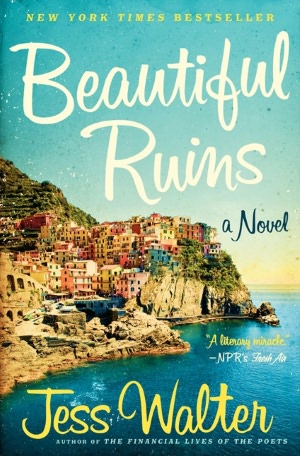
The story begins in 1962. On a rocky patch of the sun-drenched Italian coastline, a young innkeeper, chest-deep in daydreams, looks out over the incandescent waters of the Ligurian Sea and spies an apparition: a tall, thin woman, a vision in white, approaching him on a boat. She is an actress, he soon learns, an American starlet, and she is dying.
And the story begins again today, half a world away, when an elderly Italian man shows up on a movie studio's back lot—searching for the mysterious woman he last saw at his hotel decades earlier.
What unfolds is a dazzling, yet deeply human, roller coaster of a novel, spanning fifty years and nearly as many lives. From the lavish set of Cleopatra to the shabby revelry of the Edinburgh Fringe Festival, Walter introduces us to the tangled lives of a dozen unforgettable characters: the starstruck Italian innkeeper and his long-lost love; the heroically preserved producer who once brought them together and his idealistic young assistant; the army veteran turned fledgling novelist and the rakish Richard Burton himself, whose appetites set the whole story in motion—along with the husbands and wives, lovers and dreamers, superstars and losers, who populate their world in the decades that follow. Gloriously inventive, constantly surprising, Beautiful Ruins is a story of flawed yet fascinating people, navigating the rocky shores of their lives while clinging to their improbable dreams.
Monday, November 19, 2012
Rosalie's Suggestions
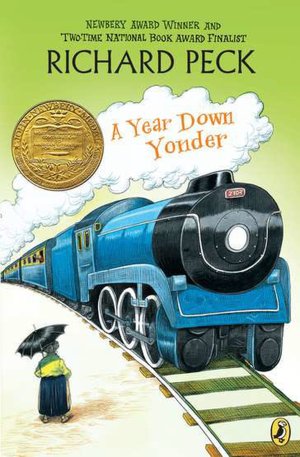
A Year Down Yonder
Richard Peck
young adult novel; Newbery Medal Winner - 130 pages
paperback
The year is 1937, and the Great Depression has hit the Dowdel family hard. Fifteen-year-old Mary Alice is sent downstate to live with her unpredictable Grandma Dowdel while her Ma and Pa eke out a meager living in Chicago. Mary Alice is less than thrilled with the arrangement. Grandma's farming community couldn't be more different from Chicago if it tried. Soon, however, she becomes Grandma's partner in crime, helping to carry out madcap schemes to benefit friends and avenge enemies. (Rosalie's comment: it was a fun read with some laugh-out-loud moments.)
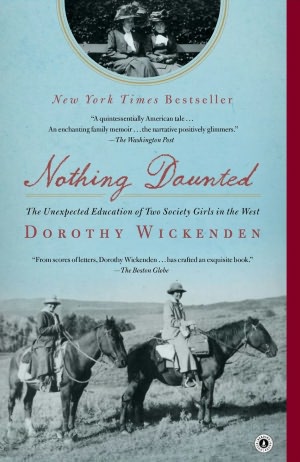
Nothing Daunted–The Unexpected Education of Two Society Girls in the West (2011)
Dorothy Wickenden
non-fiction - 226 pages
In 1916 Dorothy Woodruff and Rosamond Underwood, close friends from childhood and graduates of Smith College, shocked their families and friends in Auburn New York by taking teaching jobs in a remote school in northwestern Colorado. Based on their letters and interviews, Woodruff's granddaughter tells of the events leading up to their decision and their year in Colorado. These rich and well-educated young society women, tired of social conventions, came face to face with another America in the years before World War I–one that was poor, diverse, remote, lacking in modern conveniences, occasionally violent, and yet spectacularly beautiful and "new." The book offers a wide cross-section of life in the American West, but the core of the story is the girls' slow adaptation to a society very different from the one in which they were raised, and their evolution from naive but idealistic and open-minded society girls to strong-willed and pragmatic women who later married and raised families in the midst of the Great Depression. (Rosalie's comment: I skimmed the first hundred pages about their lives in Auburn, but really liked it when they started teaching.)
In the Garden of Beasts: Love, Terror, and an American Family in Hitler's Berlin (2011)
Erik Larson
non-fiction (history/biography) - 448 pages
paperback
This book covers the experiences of U.S. ambassador to Germany William E. Dodd and his family during his first year as US ambassador in Berlin in 1933-1934. Dodd had been teaching history at the University of Chicago when he was summoned by FDR to the German ambassadorship–a job several others had turned down. Larson, using lots of archival as well as secondary-source research and Dodd's diary, chillingly portrays the terror and oppression that slowly settled over Germany in 1933. Dodd quickly realized the Nazis' evil intentions but his warnings to his superiors in the State Department were ignored. His daughter Martha, in her mid-20s and an indiscriminate flirt, was initially smitten by the courteous SS soldiers surrounding her family, but over time she, too, became disenchanted with the brutality of the regime. Larson also traces the Dodds' lives after their time in Germany. (Rosalie's comment: I liked the historical parts, but skipped Martha's affairs.)
Wednesday, November 14, 2012
Amy's Suggestions
Eleanor Brown
Fiction - 384 pages
Paperback
Three sisters have returned to their childhood home, reuniting the eccentric Andreas family. Here, books are a passion (there is no problem a library card can't solve) and TV is something other people watch. Their father-a professor of Shakespeare who speaks almost exclusively in verse-named them after the Bard's heroines. It's a lot to live up to.
Liane Moriarty
Fiction - 488 pages
Paperback
Alice Love is twenty-nine, crazy about her husband, and pregnant with her first child. So imagine Alice’s surprise when she comes to on the floor of a gym (a gym! She HATES the gym) and is whisked off to the hospital where she discovers the honeymoon is truly over — she’s getting divorced, , she has three kids, and she’s actually 39 years old.
Terry Ryan
Memoir - 352 pages
Paperback *
The Prize Winner of Defiance, Ohio introduces Evelyn Ryan, an enterprising woman who kept poverty at bay with wit, poetry, and perfect prose during the "contest era" of the 1950s and 1960s. Evelyn's winning ways defied the church, her alcoholic husband, and antiquated views of housewives. To her, flouting convention was a small price to pay when it came to raising her six sons and four daughters.
Thursday, November 8, 2012
December Meeting
Food Assignments
Amy: sweet rolls
Bonnie: sausage
Charlotte: syrup
Collette:
Jeana: waffles
Joanne: eggs & vegetables
Rachel: bacon
Rosalie: fruit
Shelley: quiche
Sirpa: Scandinavian rye bread, ham, and cheese
Tiffanie: juice
Please email me three book suggestions by December 1st. It would be great if you could include the title, author, number of pages, and a short summary. I’ll compile the list and email it out to everyone a week or so before we meet on the 15th. (I’ll put the suggestions up here as they come in. If you’d like to post your suggestions yourself, feel free. I think I've invited everyone to be contributors.)
I've emailed you more details. Let me know if you don't get the email. :)
Wednesday, November 7, 2012
Wednesday, October 10, 2012
October Book Group
Sunday, July 22, 2012
August Schedule Change
Friday, May 11, 2012
Changes to Schedule
Wednesday, May 9, 2012
May Book Group
Saturday, December 10, 2011
2012 Book Selections
Monday, December 5, 2011
Sirpa's Suggestions

Yet Henrietta Lacks remains virtually unknown, buried in an unmarked grave.
Now Rebecca Skloot takes us on an extraordinary journey, from the “colored” ward of Johns Hopkins Hospital in the 1950s to stark white laboratories with freezers full of HeLa cells; from Henrietta’s small, dying hometown of Clover, Virginia—a land of wooden slave quarters, faith healings, and voodoo—to East Baltimore today, where her children and grandchildren live and struggle with the legacy of her cells.
Henrietta’s family did not learn of her “immortality” until more than twenty years after her death, when scientists investigating HeLa began using her husband and children in research without informed consent. And though the cells had launched a multimillion-dollar industry that sells human biological materials, her family never saw any of the profits. As Rebecca Skloot so brilliantly shows, the story of the Lacks family—past and present—is inextricably connected to the dark history of experimentation on African Americans, the birth of bioethics, and the legal battles over whether we control the stuff we are made of.
Over the decade it took to uncover this story, Rebecca became enmeshed in the lives of the Lacks family—especially Henrietta’s daughter Deborah, who was devastated to learn about her mother’s cells. She was consumed with questions: Had scientists cloned her mother? Did it hurt her when researchers infected her cells with viruses and shot them into space? What happened to her sister, Elsie, who died in a mental institution at the age of fifteen? And if her mother was so important to medicine, why couldn’t her children afford health insurance?
Intimate in feeling, astonishing in scope, and impossible to put down,The Immortal Life of Henrietta Lacks captures the beauty and drama of scientific discovery, as well as its human consequences.
Synopsis: Knopf Canada is proud to welcome this bestselling, Pulitzer Prize—winning author with eight dazzling stories that take us from Cambridge and Seattle to India and Thailand as they explore the secrets at the heart of family life.In the stunning title story, Ruma, a young mother in a new city, is visited by her father who carefully tends her garden–where she later unearths evidence of a love affair he is keeping to himself. In “A Choice of Accommodations,” a couple’s romantic getaway weekend takes a dark turn at a party that lasts deep into the night. In “Only Goodness,” a woman eager to give her younger brother the perfect childhood she never had is overwhelmed by guilt, anguish and anger when his alcoholism threatens her family. And in “Hema and Kaushik,” a trio of linked stories–a luminous, intensely compelling elegy of life, death, love and fate–we follow the lives of a girl and boy who, one fateful winter, share a house in Massachusetts. They travel from innocence to experience on separate, sometimes painful paths, until destiny brings them together again years later in Rome.
Synopsis: As Huw Morgan is about to leave home forever, he reminisces about the golden days of his youth, when South Wales still prospered and coal dust had not yet blackened the valley. Drawn simply and lovingly, with a crisp Welsh humor, Llewellyn's characters fight, love, laugh, and cry, creating an indelible portrait of a people.Sunday, December 4, 2011
Amy's Suggestions

But behind the scenes, a fierce competition is underway—a duel between two young magicians, Celia and Marco, who have been trained since childhood expressly for this purpose by their mercurial instructors. Unbeknownst to them, this is a game in which only one can be left standing, and the circus is but the stage for a remarkable battle of imagination and will. Despite themselves, however, Celia and Marco tumble headfirst into love--a deep magical love that makes the lights flicker and the room grow warm whenever they so much as brush hands.
True love or not, the game must play out, and the fates of everyone involved, from the cast of extraordinary circus performers to the patrons, hang in the balance, suspended as precariously as the daring acrobats overhead. Written in rich, seductive prose, this spell-casting novel is a feast for the senses and the heart.
NOTE: Paperback available from miscellaneous sellers online or hardcover available for $16.17 at Amazon.com / $16.33 at BN.com.

Alice approaches her book as a series of vignettes about her relationship with her father and the life lessons learned from the books he read to her.
When We Were Strangers (Fiction)
Tiffanie's Suggestions
Synopsis: "Sometimes you do not truly observe something until you study it in reverse," writes Karim Issar upon arrival to New York City from Qatar in 1999. Fluent in numbers, logic, and business jargon yet often baffled by human connection, the young financial wizard soon creates a computer program named Kapitoil that predicts oil futures and reaps record profits for his company.
Synopsis: It's 1952 and the Scott family has just moved from Los Angeles to London. Here, fourteen-year-old Janie meets a mysterious apothecary and his son, Benjamin Burrows - a fascinating boy who's not afraid to stand up to authority and dreams of becoming a spy. When Benjamin's father is kidnapped, Janie and Benjamin must uncover the secrets of the apothecary's sacred book, the Pharmacopoeia, in order to find him, all while keeping it out of the hands of their enemies - Russian spies in possession of nuclear weapons. Discovering and testing potions they never believed could exist, Janie and Benjamin embark on a dangerous race to save the apothecary and prevent impending disaster.Shelley's Suggestions

Little Princes is a true story of families and children, and what one person is capable of when faced with seemingly insurmountable odds. At turns tragic, joyful, and hilarious, Little Princes is a testament to the power of faith and the ability of love to carry us beyond our wildest expectations.
NOTE: Paperback release scheduled for 12/27/11.
Charlotte's Suggestions

I remember pacing hospital and house and hills, and thinking that these operations would either work or not and he would either live or die. There was a certain clarity there; I used to crawl into that clarity at night to sleep. But nothing else was clear. I used to think, in those sleepless days and nights, what if they don't fix him all the way and he's a cripple all his life, a pale thin kid in a wheelchair who has Crises? What if his brain gets bent? What if he ends up alive but without his mind at all? What then? Who would he be? Would he always be what he might have been? Would I love him still? What if I couldn't love him? What if he was so damaged that I prayed for him to die? Would those prayers be good or evil?
I don't have anything sweet or wise to say about those thoughts. I can't report that God gave me strength to face my fears, or that my wife's love saved me, or anything cool and poetic like that. I just tell you that I had those thoughts, and they haunt me still. I can't even push them across the page here and have them sit between you and me unattached to either of us, for they are bound to me always, like the dark fibers of my heart. For our hearts are not pure; our hearts are filled with need and greed as much as with love and grace; and we wrestle with our hearts all the time. The wrestling is who we are. How we wrestle is who we are. What we want to be is never what we are. Not yet. Maybe that's why we have these relentless engines in our chests, driving us forward toward what we might be.

Synopsis: The Pulitzer Prize–winning author of Peter the Great, Nicholas and Alexandra, and The Romanovs returns with another masterpiece of narrative biography, the extraordinary story of an obscure young German princess who traveled to Russia at fourteen and rose to become one of the most remarkable, powerful, and captivating women in history.Born into a minor noble family, Catherine transformed herself into Empress of Russia by sheer determination. Possessing a brilliant mind and an insatiable curiosity as a young woman, she devoured the works of Enlightenment philosophers and, when she reached the throne, attempted to use their principles to guide her rule of the vast and backward Russian empire. She knew or corresponded with the preeminent historical figures of her time: Voltaire, Diderot, Frederick the Great, Empress Maria Theresa of Austria, Marie Antoinette, and, surprisingly, the American naval hero, John Paul Jones.
Reaching the throne fired by Enlightenment philosophy and determined to become the embodiment of the “benevolent despot” idealized by Montesquieu, she found herself always contending with the deeply ingrained realities of Russian life, including serfdom. She persevered, and for thirty-four years the government, foreign policy, cultural development, and welfare of the Russian people were in her hands. She dealt with domestic rebellion, foreign wars, and the tidal wave of political change and violence churned up by the French Revolution that swept across Europe.
The story is superbly told. All the special qualities that Robert K. Massie brought to Nicholas and Alexandra and Peter the Great are present here: historical accuracy, depth of understanding, felicity of style, mastery of detail, ability to shatter myth, and a rare genius for finding and expressing the human drama in extraordinary lives.
History offers few stories richer in drama than that of Catherine the Great. In this book, this eternally fascinating woman is returned to life.
Jeana's Suggestions

Synopsis: As a kid, Jacob formed a special bond with his grandfather over his bizarre tales and photos of levitating girls and invisible boys. Now at 16, he is reeling from the old man's unexpected death. Then Jacob is given a mysterious letter that propels him on a journey to the remote Welsh island where his grandfather grew up. There, he finds the children from the photographs--alive and well--despite the islanders’ assertion that all were killed decades ago. As Jacob begins to unravel more about his grandfather’s childhood, he suspects he is being trailed by a monster only he can see. A haunting and out-of-the-ordinary read, debut author Ransom Rigg’s first-person narration is convincing and absorbing, and every detail he draws our eye to is deftly woven into an unforgettable whole. Interspersed with photos throughout, Miss Peregrine's Home for Peculiar Children is a truly atmospheric novel with plot twists, turns, and surprises that will delight readers of any age.
NOTE: Hardcover only ($9.44 at Amazon.com / $9.91 at BN.com).
Arthur and George (Fiction)
by Julian Barnes
446 pages
Synopsis: Arthur is Sir Arthur Conan Doyle, physician, sportsman, gentleman par excellence and the inventor of Sherlock Holmes; George is George Edalji, also a real, if less well-known person, whose path crossed not quite fatefully with the famous author's. Edalji was the son of a Parsi father (who was a Shropshire vicar), and a Scots mother. In 1903, George, a solicitor, was accused of writing obscene, threatening letters to his own family and of mutilating cattle in his farm community. He was convicted of criminal behavior in a blatant miscarriage of justice based on racial prejudice. Eventually, Sir Arthur ("Irish by ancestry, Scottish by birth") heard about George's case and began to advocate on his behalf. In this combination psychological novel, detective story and literary thriller, Barnes elegantly dissects early 20th-century English society as he spins this true-life story with subtle and restrained irony. Every line delivered by the many characters—the two principals, their school chums (Barnes sketches their early lives), their families and many incidentals—rings with import. His dramatization of George's trial, in particular, grinds with telling minutiae, and his portrait of Arthur is remarkably rich, even when tackling Doyle's spiritualist side. Shortlisted for the Booker, this novel about love, guilt, identity and honor is a triumph of storytelling, taking the form Barnes perfected inFlaubert's Parrot (1985) and stretching it yet again.
Synopsis: "Lost Boy" John Bul Dau’s harrowing experience surviving the brutal horrors of Sudanese civil war and his adjustment to life in modern America is chronicled in this inspiring memoir and featured in an award-winning documentary film of the same name. Movingly written, the book traces Dau’s journey through hunger, exhaustion, terror, and violence as he fled his homeland, dodging ambushes, massacres and attacks by wild animals. His tortuous, 14-year journey began in 1987, when he was just 13, and took him on a 1,000-mile walk, barefoot, to Ethiopia, back to Sudan, then to a refugee camp in Kenya, where he lived with thousands of other Lost Boys. In 2001, at the age of 27, he immigrated to the United States. With touching humor, Dau recounts the shock of his tribal culture colliding with life in America. He shares the joy of reuniting with his family and the challenges of making a new life for himself while never forgetting the other Lost Boys he left behind.
Heather's Suggestions

Rachel Kalama, a spirited seven-year-old Hawaiian girl, dreams of visiting far-off lands like her father, a merchant seaman. Then one day a rose-colored mark appears on her skin, and those dreams are stolen from her. Taken from her home and family, Rachel is sent to Kalaupapa, the quarantined leprosy settlement on the island of Moloka'i. Here her life is supposed to end---but instead she discovers it is only just beginning.
With a vibrant cast of vividly realized characters, Moloka'i is the true-to-life chronicle of a people who embraced life in the face of death. Such is the warmth, humor, and compassion of this novel that "few readers will remain unchanged by Rachel's story".
Synopsis: Chang, a former Beijing correspondent for the Wall Street Journal, explores the urban realities and rural roots of a community, until now, as unacknowledged as it is massive—China's 130 million workers whose exodus from villages to factory and city life is the largest migration in history. Chang spent three years following the successes, hardships and heartbreaks of two teenage girls, Min and Chunming, migrants working the assembly lines in Dongguan, one of the new factory cities that have sprung up all over China. The author's incorporation of their diaries, e-mails and text messages into the narrative allows the girls—with their incredible ambition and youth—to emerge powerfully upon the page. Dongguan city is itself a character, with talent markets where migrants talk their way into their next big break, a lively if not always romantic online dating community and a computerized English language school where students shave their heads like monks to show commitment to their studies. A first generation Chinese-American, Chang uses details of her own family's immigration to provide a vivid personal framework for her contemporary observations. A gifted storyteller, Chang plumbs these private narratives to craft a work of universal relevance.
Synopsis: What a stitch! Willis' delectable romp through time from 2057 back to Victorian England, with a few side excursions into World War II and medieval Britain, will have readers happily glued to the pages. Rich dowager Lady Schrapnell has invaded Oxford University's time travel research project in 2057, promising to endow it if they help her rebuild Coventry Cathedral, destroyed by a Nazi air raid in 1940. In effect, she dragoons almost everyone in the program to make trips back in time to locate items--in particular, the bishop's bird stump, an especially ghastly example of Victorian decorative excess. Time traveler Ned Henry is suffering from advanced time lag and has been sent, he thinks, for rest and relaxation to 1888, where he connects with fellow time traveler Verity Kindle and discovers that he is actually there to correct an incongruity created when Verity inadvertently brought something forward from the past. Take an excursion through time, add chaos theory, romance, plenty of humor, a dollop of mystery, and a spoof of the Victorian novel, and you end up with what seems like a comedy of errors but is actually a grand scheme "involving the entire course of history and all of time and space that, for some unfathomable reason, chose to work out its designs with cats and croquet mallets and penwipers, to say nothing of the dog. And a hideous piece of Victorian artwork." Tuesday, November 22, 2011
Rosalie's Suggestions
Synopsis: A biography of World War II hero Louis Zamperini. As a boy, Louis had been an incorrigible delinquent but as a teenager he channeled his defiance into running, discovering a talent that carried him to the Berlin Olympics and within sight of the four-minute mile. When WWII came, he became an airman. Shot down over the Pacific he survived thirst, starvation, and sharks on a foundering raft. Captured by the Japanese, he survived for more than two and half years in several brutal Japanese internment camps as a prisoner of war.
Synopsis: When her father and brother had to flee Kabul, Kamila Sidiqui had to find a way to survive under Taliban rule. With nothing but an idea and the tenacity to see it through, she started a home business with her sisters that grew to support the finances of an entire neighborhood. Without any sewing skills to begin with, she learned to sew and she and her sisters worked from their home in the Khair Khana area of Kabul. As orders for dresses and pant suits started to increase, so did demand for additional pairs of hands. Soon, word got out about the business, and women from all over the area came knocking on their door. What started out as Kamila's idea to feed her own family turned into a source of income for other women in her community.
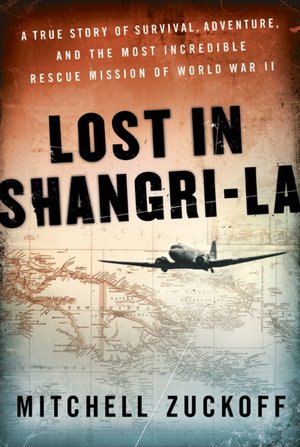
Synopsis: In the final days of World War II, 24 soldiers and WACs boarded a transport plane for a sightseeing trip over a newly discovered valley deep within the jungle-covered mountains of Dutch New Guinea populated by thousands of spear-carrying tribesmen, rumored to be cannibals.Owing to a lethal combination of foolishness and inexperience, the plane crashed, killing all aboard except two soldiers and a WAC. They faced certain death unless they left the crash site because the jungle canopy was so dense no rescue plane could see them. Wounded and in pain, the trio made a harrowing trip down the steep mountainside to a small clearing where they thought a rescue plane could see them. Their clearing turned out to be a sweet potato patch of a primitive tribe of superstitious natives who had never before seen a white person. This is a fascinating true story of one of the final first-contacts in human history.
Sunday, November 6, 2011
Hello lovely ladies!!
Please come and bask in the glow of book group!
Love to all,
Kim